Can Track Skills OS be used alongside our existing Talent Management System (TMS)?
+
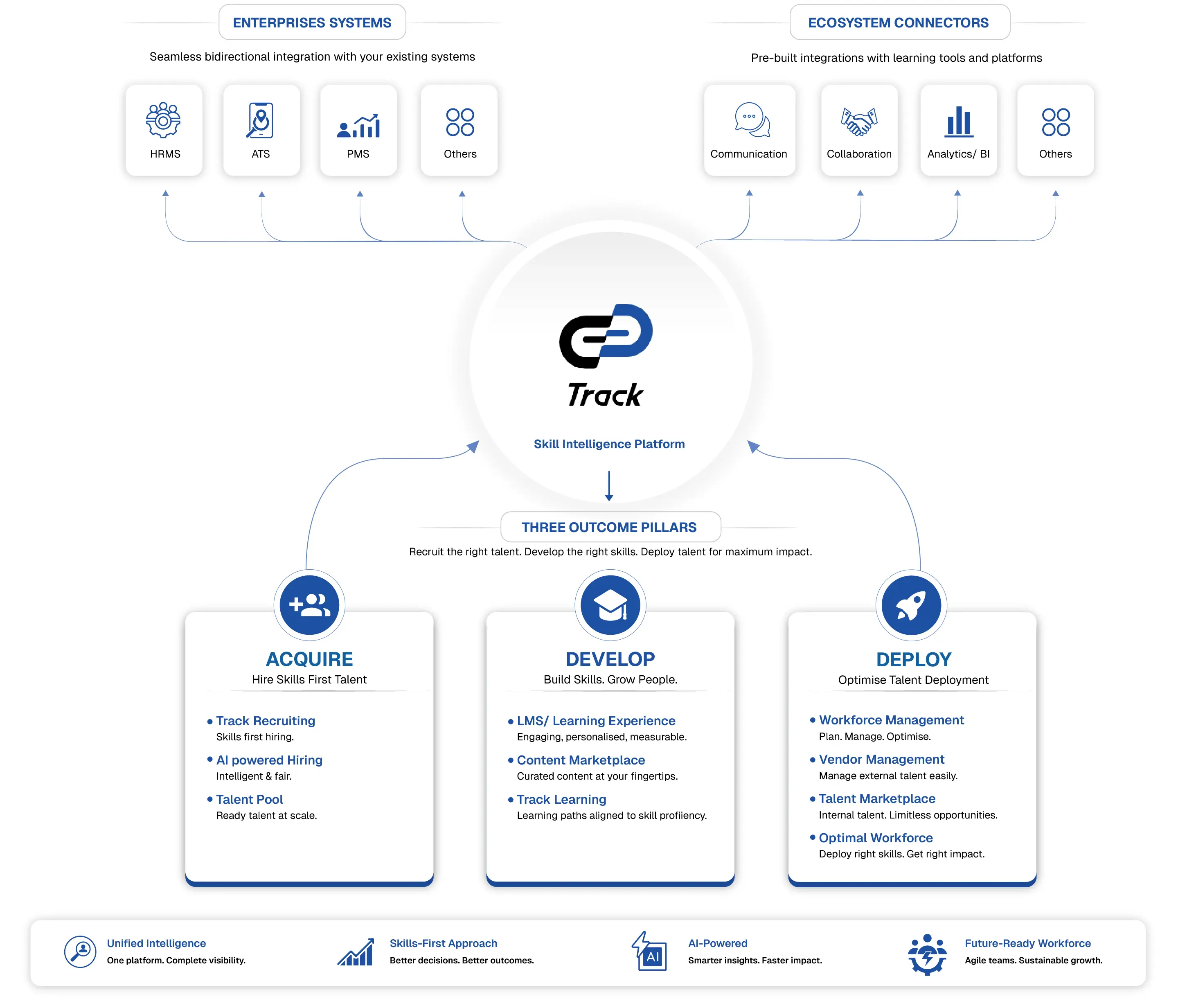
Yes. Track Skills OS is designed as an “extension hub,” enabling seamless integration with your existing TMS, LMS, and HRIS through APIs. Rather than replacing your current systems, Track Skills OS enhances them by adding high-resolution skill data and AI-driven intelligence to your organisation.
Can we customise job roles and skills to fit our business?+
Absolutely.
In addition to Track Skills OS’s standard skill taxonomy (aligned with frameworks such as DSS and ITSS), you can define and manage your own custom job roles and skill requirements tailored to your business needs.
Will collecting skill data increase the workload for employees and HR teams?+
No. Track Skills OS is designed to minimise manual input. For example, employees can simply upload resumes or CVs (PDF), and AI will automatically extract and tag skill data based on their experience. This significantly reduces the need for manual data entry.
What makes Track Skills OS different from traditional HR systems? +
Traditional HR systems focus on static data such as job titles, roles, and work history.
Track Skills OS, on the other hand, puts skills at the center, providing a dynamic and real-time view of your workforce. This enables more accurate hiring, smarter development, and data-driven deployment decisions.
Can Track Skills OS support internal mobility and workforce planning?+
Yes.
By making skills visible across your organisation, Track Skills OS helps identify skill gaps, match employees to new opportunities, and support strategic workforce planning. Decisions are based on actual capabilities, not just job titles.
How long does it take to implement Track Skills OS?+
Implementation is typically fast and flexible, because Track Skills OS integrates with your existing systems. Most organisations can start seeing value within a few weeks, depending on the level of customisation and integration required.
In addition to Track Skills OS’s standard skill taxonomy (aligned with frameworks such as SFIA and ONET) you can define and manage your own custom job roles and skill requirements tailored to your business needs.